Friday, March 31, 2023

A Disciples preacher & a Methodist preacher collide

These are the tombstones in Keokuk's Oakland Cemetery of the Rev. Nathan Edward Cory, one of the stars in the panoply of Iowa's pioneer Disciples of Christ preachers. Arriving in the state ca. 1851 from Indiana, he preached nonstop --- with time out to travel, write and lecture --- until his death on the 19th of October 1917 at the I.O.O.F. Home in Mason City, age 80. (Find a Grave photos by Carl Nollen)

Much of his early preaching was done in the south of Iowa and from the late 1860s until roughly 1875 he served the Christian Church in Chariton as part of a charge that included Osceola, where he and his family lived, and at times Last Chance.

It was here that he encountered the Rev. Israel Mershon, assigned to the Newbern circuit of the Methodist Episcopal Church. The Rev. Mr. Mershon was some 25 years senior to the Rev. Mr. Cory, then in his 30s. While no one doubted Mershon's orthodoxy or work ethic, he had a history of difficulty relating to parishioners and by 1873, the Newbern faithful were in disarray.

In the spring of that year, Mershon challenged Cory to a mid-summer debate on the topic of baptism, something Methodists and Disciples could squabble about if they cared to do so since the former sprinkled and the latter dunked.

The Rev. Mr. Cory wasn't interested and rebuked his fellow clergyman rather harshly, a rebuke reported upon as follows in The Chariton Patriot of April 30, 1873, under the headline, "Challenge."

+++

Rev. Mr. Mershon, of the Newbern circuit, recently sent a challenge to Rev. N.E. Cory, pastor of the Christian churches at Chariton and Osceola, to debate "Baptism." In order to have a warm time, Mr. M. suggested July 7th as a good time to commence the discussion.

Mr. C. replied by quoting the words of Nehemiah: "I am doing a great work, so that I cannot come down; why should the work cease, whilst I leave it, and come down to you?"

The Elder further writes in substance that the church and cause of Christianity are cold and dead at Newbern and that Brother M. could do more good to try and build up a church of his own faith than endeavor to pull down the doctrines of other churches.

+++

The Rev. Mr. Cory's star continued to rise after that, but the Rev. Mr. Mershon left the ministry --- temporarily. He got himself elected Marion County superintendent of schools in 1874, then proceeded to annoy his constituents so badly they declined to re-elect him.

After that, he moved to Des Moines, continued to accept preaching assignments and eventually died during March of 1888 at the age of 76. He and his wife are buried in Woodland Cemetery.

An acquaintance characterized the Rev. Mr. Mershon this way: "He was an industrious man, anxious to be useful, but did not understand the demands of human nature, nor could he adapt himself to those demands so as to render himself as popular with the people he served as his undoubted piety and admitted talents would lead one to expect. Hence he did not succeed in the ministry to the extent that was sufficient to warrant his long continuance in the work."

Ouch.

Thursday, March 30, 2023

The Swedish invasion of Lucas County

I've written several times about this church building, home to Lucas County's Swedish Lutheran (now First Lutheran) congregation from the time of its dedication on Oct. 4, 1903, until the latter years of the 20th century, when the congregation moved to a new building in the north part of Chariton. See "Another substantial dose of Lutheran history" for one installment.

Although many of our newer 21st century residents are from Ukraine, 19th century Swedish people remain Lucas County's largest national immigrant group.

These pioneers Swedes seem to have begun arriving about 1868, First Lutheran was organized during 1869 and in 1870 the federal census enumerator found in Lucas County163 men, women and children who had been born in Sweden. By 1880, the peak year, the number born in Sweden had increased to 584. 

So I was interested in the following update on Swedish immigration, published in The Chariton Patriot of May 20, 1874.

+++

It is a well known fact to many of our readers that part of the eastern portion of Lucas county is somewhat rough. And this feature has prevented its settlement to much extent, and the greater part of it was allowed to remain in its primeval condition; while all the more desirable parts were taken up and cultivated. The land is mostly covered with small timber, requiring more labor to improve it, and hence people desirous of making a home sooner moved where there were less impediments to culture.

The land, although of a  rough character, is rich and produces crops as large as the prairie soil. There are persons for every place and everything. The Swedes, who had always been accustomed to rough and stony land, here found homes which suited their tastes better than prairie land. The greater part of them have only been in this country six years, and by hard work and economy have nearly all become land owners.

They came here in most instances without any money, having barely enough to pay for their transportation from Sweden to America. For the first two or three years they hire out, and generally save a sum sufficient to purchase a small farm. They are a civil and industrious people, and are good citizens. After five years residence, their farms, buildings, fences and stock will bear a good comparison with other sections that have been settled for twice or three times that period.

We passed through their settlement a few days ago, that six years since was all unoccupied land, and which is now thickly settled, and the whole country is cultivated as a garden. The Swedes learn our language handily, and many already take and read English newspapers, besides the Swedish paper published in Chicago.

+++

First Lutheran's 1869 organizational meeting took place at Chariton's original First Baptist Church building, then located on South Main Street just south of the current Legion Hall, but the congregation gathered thereafter until 1875 --- when its first home was built --- in the courthouse.

The 1903 history contains the following paragraph that identifies early Swedish immigrants who attended the 1869 meeting and still were alive and kicking during 1903 --- "J. F. Ekfelt, Mrs. Mary J. Holmes, Mrs. Alfred Johnson, P. J. Lindquist, O. Olson, J. Frederic Johnson's family, the Lauger family, Sutherland, Charley Brown of Derby and family, his son-in-law, A.G. Johnson, also of Derby, Tull, of Derby, Erlandson family, C. Rhamgren, Tapper family, Carl Larson family. Several families have taken up a residence elsewhere since then, among whom are the Swangrens, Rockford, Ill.; John Rydlund and sister, Kearney, Nebraska; Andrew Anderson and Andrew Peterson, Sioux City; Jacob and S. G. Olson and families, of Stanton; P. E. Anderson and Victor Munson families of Red Oak."

Wednesday, March 29, 2023

Another piece of the south of Iowa gone ...

The 1927 P.E.O. Memorial Library building on the Iowa Wesleyan campus houses today administrative offices and an art gallery. A newer and larger library is located elsewhere on campus.

The announcement Tuesday that Iowa's oldest co-educational institution of higher learning, Iowa Wesleyan University of Mount Pleasant, will close on May 31 has caused a good deal of sorrow as well as the usual bickering.

The decision by the university's board of trustees was unanimous; the immediate cause, rejection of a request for $12 million in federal American Rescue Plan Act funding via the Reynolds administration's Empower Rural Iowa Initiative program.

Iowa Wesleyan was one of four smaller private Iowa universities that applied for $12 million in aid each through these programs --- all rejected. The others were Graceland, William Penn and Upper Iowa.

The closure impacts about 850 students and 110 faculty and staff and, of course, leaves a giant hole in the economy and culture of Mount Pleasant and southeast Iowa in general.

Iowa Wesleyan had struggled financially for years for a range of reasons and was hit hard by the COVID-19 situation. Everyone agreed recent signs --- including record enrollment --- were promising. But the university failed to make the case that additional spending would change the long-term outlook for a small, rural university with limited endowment in what now is a rather remote place.

So it was a sad day.

+++

Iowa Wesleyan began life as the Mount Pleasant Literary Institute in 1842, and was known as Mount Pleasant Collegiate Institute from 1843 to 1855, Iowa Wesleyan University from 1855 to 1912, and Iowa Wesleyan College from 1912 to 2015. The name reverted to Iowa Wesleyan University in 2015.

It was the state's first co-educational institution of higher learning. Dubuque's St. Raphael Seminary, predecessor of today's Loras College, actually was founded three years earlier by Mathias Loras, first bishop of Dubuque, but it was an all male institution. 

Iowa Wesleyan also has the distinction of being the founding site of the P.E.O. Sisterhood, organized on Jan. 21, 1869, in Old Main on the university campus.

Many Lucas Countyans have attended Iowa Wesleyan over the years, although we've tended to favor Simpson at Indianola, primarily because of its proximity. The small advertisement here is taken from The Chariton Herald of July 30, 1891.

+++

When the university closes on May 31, campus ownership will transfer to the U.S. Department of Agriculture. The campus was used in 2016 as collateral for a $26.1 million loan and mortgage guarantees from the federal agency, according to state officials.

If you'd like to read more, Clark Kauffman has the best and most detailed (and free) account I've found under the headline, "Owing $26 million to the USDA, Iowa Wesleyan University announces closure," at Iowa Capital Dispatch.

Tuesday, March 28, 2023

From slavery in Missouri to freedom in Chariton

Susan and George Scott family, 1870 census of Chariton.

A couple of weeks ago, I happened upon the obituary of Susan Joplin Scott, published in the Grant County (Wisconsin) Herald at Lancaster on Oct. 20, 1920. Susan, 88 when she died, had spent most of her life in Chariton before moving to Lancaster in old age to live with her only surviving daughter, Mary (Mrs. Hardy) Grimes.

Susan's husband, George Scott (died 1881), and son, Walter Scott (died 1903), are buried in unmarked graves in the Chariton Cemetery, but Susan's remains were interred in Pleasant Ridge Cemetery, near Lancaster, as are those of her daughter and son-in-law.

The Scotts form another piece in the puzzle that is Lucas County's once sizable black population, now vanished. 

+++

According to Susan's obituary, the Scotts arrived in Iowa from Missouri, a slave state, as the Civil War was winding down. Early editions of The Chariton Democrat show that they had located in Chariton prior to December of 1868 when George received eight write-in votes for mayor among 97 cast during city elections. Anderson Mason, a barber, was among the 97 voters --- the first time a black person had voted in any election in Lucas County.

A link between Chariton, Iowa, and Lancaster, Wisconsin, is provided by Susan's son-in-law, Hardy Grimes, who was a brother of Lillie (Green) Richmond. Lillie and her husband, Romulus Richmond, and their older children moved from Wisconsin to Chariton during 1887 after he had been called to preach here.

It seems likely that Lillie introduced her brother to Mary Scott. They married in Wisconsin during 1905 and settled on a farm near Lancaster where they were joined, eventually, by Susan.

Here's the text of Susan's obituary:

+++

Susan Joplin, eldest daughter of Kathryn and Hampton Joplin, was born in Rockcastle County, Kentucky, August 11, 1832, and died at the home of her daughter, Mrs. Mollie Grimes, of Lancaster, Sept. 21, 1920, being 88 years, one month and 10 days old.

Mrs. Scott had been in poor health for the last seven years, becoming very deaf although being able to be about the home and always maintaining an uncomplaining spirit.

She was married to Joseph D. Nailan in 1847 and came to Cameron, Mo., to live. To this union was born one son, Napoleon B., who died Aug. 30,  1920. His mother was in such poor health that she was never told of his death.

Jos. D. Nailan died one year after their marriage and on July 25th, 1864, she was married to Geo. Scott. To this union was born four children,  one dying in infancy. The father died in 1881, the oldest son, Walter, died Feb. 14, 1903, and Anna died Feb. 10, 1912, thus leaving Mrs. Grimes of this city as the only survivor of the family.

Besides her own immediate family she leaves one sister, Mrs. Elizabeth True, of Chicago, who was present at the time of her sister's death; also one granddaughter, Mrs. Cleo Bryant,  and one grandson, Roy Leighton, also two great-grandsons, Melvin and Donavan Leighton.

Mrs. Scott began the Christian life at the age of 12 years and was a charter member of the African Methodist Episcopal Church in Chariton, Lucas County, Iowa. She was born a slave and with her family she left Missouri and came to Iowa during the closing days of the Civil War and came all the way by night.

Besides her own family,  she raised to womanhood Mrs. Bernice Richmond of Des Moines, Iowa. Thus has a good woman converted at a Methodist camp meeting away back there in the days of slavery lived a useful  life and come to a triumphant end. And we believe that a "Kindly Light" has not only lead her from the enthraldom of human slavery, but also from the spiritual bondage to the immortal day of the eternal life.

The funeral services were held from the home, Rev. Campbell officiating. Burial was made at the Pleasant View Cemetery.

+++

I wrote a little last week in a post headlined "The Life and Times of Elizabeth Clark Stokesbury" about Susan's son by her first marriage, Napoleon Bonaparte Nailen. Born Feb. 23, 1853, in Caldwell County, Missouri. He accompanied his mother and stepfather to Chariton and went to work as a young man at the Bates House hotel.

He met Elizabeth Stokesbury, reportedly working as a chamber maid there, and they married in Chariton on the 7th of April 1881. She was 20 at the time. He was 29 and the hotel's night clerk.

A mixed-race marriage faced many challenges at the time, but theirs endured for 40 years and produced three children. The Nailens moved from Chariton to Cedar Rapids, where he began a long career as a carpenter, and still were living when he died of cancer at an Iowa City hospital on Aug. 30, 1920. Elizabeth then relocated to California where she died in Pasadena during 1946.

Susan's daughter, Anna, reportedly born Aug. 2, 1862, was married twice. Both husbands, Henry Leighton and Newton Cary, were coal miners. She died, according to an online family database, in Des Moines on Feb. 10, 1913, and was buried in the cemetery at the legendary mining town of Buxton.

Son Walter, born about 1865, died of a self-inflicted gunshot wound in Chariton on Feb. 27, 1903. He had never married.

Daughter Mary Grimes died in Grant County, Wisconsin, during 1933, age 69; and her husband, Hardy, passed on July 14, 1936, after a heat stroke sustained while putting up hay. They had no children.


Monday, March 27, 2023

More like Jesus, you say?


After some deliberation, I decided that this bit of online wisdom would be appropriate to post on a 77th birthday.

I'm not distressed about getting old; nor do I have any interest in reliving the past. But paralleling myself and the big guy in Christianity, orthodox and non, or merely cultural, is a bit of a stretch.

Points 1-4, no problem.

Need to work harder on Point 5 during the upcoming year: "Be kind, loving, and merciful."

No interest at all, however, in napping on boats. My bed works just fine for that, thank you very much.

Since we're in the season, I'll happily acknowledge that Jesus rises from the dead moment by moment, day after day, in the lives and hearts of those who put into action the directions he left behind regarding love and charity. We need more of that. 

That, to me, is what Easter --- now upcoming --- is all about, wrapped in the mythology of physical resurrection and with a directive to carry the good work forward.


Sunday, March 26, 2023

Thou shalt not, in Chariton at least ....


In the midst of news reports about Iowa's current legislative season, I got to wondering about how Chariton set about guarding the public and private morality of its people back in the early days --- when Lucas County was a far more rough and tumble sort of place than it is these days.

So among other reports I found this set of ordinances, adopted by City Council on Jan. 9, 1880, and effective upon publication in Chariton newspapers --- in this case, The Leader of Feb. 14.

What follows is a transcription of Sections 1-8 of Ordinance No. 21:

+++

ORDINANCE NO. XXI

An Ordinance defining certain offenses, and providing for the punishment of the offenders.

Be it ordained by the City Council of the City of Chariton.

Section 1. No person shall, within the limits of the city, use any abusive, profane, blasphemous, obscene or offensive language to or about any other person.

Section 2. No person shall use any profane, blasphemous, vulgar or obscene language in or on any public place within the limits of the city.

Section 3. No person shall make, or cause to be made, any loud, boisterous or unusual noises to the disturbance or annoyance of any other person within the city.

Section 4. No person shall disturb or annoy any place of worship or person therein worshipping, or any lawful assembly of persons congregated together, by any rude, boisterous or unbecoming language or behavior in or near the place of worship or place of assembly within this city.

Section 5. No person shall, within the city limits, follow the avocation of a prostitute, neither shall for the purpose of prostitution, resort, or go to a place where a prostitute stays or is kept.

Section 6. No person shall, within this city, publicly appear  in a state of nudity, or in an indecent or obscene dress, or in a dress not belonging or appropriate to his or her person or sex, or make any indecent exposure of his or her person in a state of undress before any window fronting on any street or alley, or be guilty of any lewd or indecent conduct before any one,  or in any public place sell, or offer to sell, or exhibit to any person, any lewd or obscene book,  picture, paper, publication or representation, or perform any indecent or obscene play or representation on the stage, or take part, either publicly or otherwise, in playing or performing, or assisting in the playing or performing of any indecent or obscene play.

Section 7. No person shall, within in the city, stand for service, or exhibit, or cause to be stood for service or exhibited, any stallion, jack, bull or boar, unless entirely excluded from the public view, or the view of any private family.

Section 8. No person shall, within the city, publicly, or so as to be seen or heard by the public, or within hearing or sight of a private residence, play at billiards, pool, ten pins, pigeon hole, carondolet, cards, quoits or any other games of amusement or chance on the Sabbath day.

+++

I'm mildly confused by use of the term "avocation" in the ordinance to describe the labors of a prostitute. I'd always thought of this as more of a profession than a pastime, but then perhaps usage has changed during the 143 years since these became law.

Saturday, March 25, 2023

Have you no shame, David?

This drawing caught my attention this morning --- Michelangelo's David with enhanced equipment in the aftermath of an incident reported earlier this week in Florida. There, the principal of Tallahassee's Classical School, a charter outfit, was forced to resign after students were exposed to an image of the legendary statue's tiny tackle in a Renaissance art class.

One parent declared the statue pornographic, two others complained that they had not been informed that their children would be exposed to it.

Yes, of course the whole business is absurd. On the other hand, David isn't a newcomer to controversy because of his nudity. 

I learned a good deal by reading an article entitled "Art or pornography? Michelangelo's David has been controversial since the beginning. Here's how:" Check it out for yourself.


Friday, March 24, 2023

The least of these ....

Those of us who are culturally Christian --- even when orthodoxy is not a concern --- sometimes get verses from either the Hebrew Bible or Christian New Testament stuck in our heads, programmed "repeat."

And that's been the case this week for me with Matthew 25:40 --- And the king will answer them, ‘Truly I tell you, just as you did it to one of the least of these brothers and sisters of mine, you did it to me.’

The king here of course is Jesus and the deeds, acts of charity --- feeding the hungry, covering the naked and much more.

This is the day when bathroom rules for transgender kids across Iowa change, thanks to the Legislature and Gov. Kim Reynolds. And families scramble to figure out how to provide gender affirming medical attention in a state that now forbids it.

Transgender numbers in Iowa are miniscule, actual problems related to transgender people nonexistent. But here we have the Republican statehouse majority and its fundamentalist Christian enablers targeting what surely is for now the "least of these brothers and sisters."

Although distressing, this really shouldn't surprise. Some forms of Christianity thrive only when there are devils to scare the faithful into submission --- the mythical devil and those demonized to serve as stand-ins. That's included, as the centuries have rolled by, anyone of a different faith, most notably the Jewish people; black and indigenous people; LGBTQ+ people. And now the least in numbers among the latter.


Thursday, March 23, 2023

Kim Reynolds' "heart breaks" for trans kids ?!?


Iowa Gov. Kim Reynolds, who has incorporated attacks on transgender kids and other LGBTQ+ people in her agenda for 2023, sighed into law this week legislation that denies gender-affirming health care to Iowans under age 18 and prohibits schools from allowing transgender people of any age to use facilities that align with their gender identity.

"My heart breaks," Reynolds reportedly told The Des Moines Register. "I’ve sat down and met with them. It’s not easy. It’s not easy for me either. It’s not easy for our elected officials to make these decisions. So I just, I hope they know that."

Tiny violins are playing in the background as we shed a few tears for the governor and her Republican statehouse majority.

Laura Belin responds this morning in a Bleeding Heartland piece headlined "Governor, spare us your fake concern for trans kids." You'll find it by following this link.

And the Washington Post has an informative lead piece this morning headlined, "Most trans adults say transitioning made them more satisfied with their lives."

The Post piece deals with a broad range of trans issues and offers considerable general insight into the lives and experiences of transgender people.

Both are well worth a read.


Wednesday, March 22, 2023

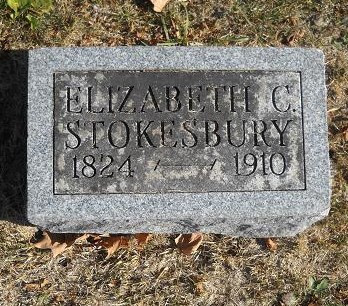
The life and times of Elizabeth Clark Stokesbury


I've been doing a little research this week into the lives of two powerful Chariton women --- Elizabeth Clark Stokesbury and Susan Joplin Scott.

Elizabeth, widowed in 1867 at age 43 after giving birth to 16 children, arrived in the south of Iowa from Ohio that fall with many of her children and moved into Chariton from northern Wayne County during 1883. Susan, born into slavery, arrived in Chariton during the Civil War with her husband, George Scott, and children, fleeing north from Trenton, Missouri, in search of freedom.

The two are connected because Elizabeth's daughter, also Elizabeth, and Susan's son, Napoleon Bonaparte Nailen, fell in love and married in Chariton on the 7th of April 1881. She was 20 at the time and he was 29. He was night clerk at the Bates House hotel and she, reportedly, was employed there as a chamber maid. This was a marriage that endured 40 years, until his death, but was considered scandalous by some at the time it occurred.

I'll come back to Susan's story another time and focus today on Elizabeth.

The first item transcribed here was published with a five-generation photograph in The Chariton Herald of Jan. 2, 1908, as follows:

+++


Rarely in the rush and whirl of these modern times, when men and women consume a long life's energy in a few short years in a wild effort to win wealth and distinction, do we have the pleasure of knowing full well our children's children; and when now and then someone lives to a grand old age and can look upon their great-grandchildren, their pleasure is the envy of hosts. Mr. Elizabeth Stokesbury, who now lives in the southwest part of our city, surely enjoys the crowning glory of  old age; for it is her proud distinction to look no only upon her children's children, but upon her children's children's children's children.

Miss Elizabeth Clark was born in Fayette County, Ohio, in 1824, was married to John Stokesbury in 1840, and to them  were born 16 children, nine of whom are living; they are Robert M., of Keller, Washington; Mrs. Angeline Wells, of Fayette Co., Ohio; Mrs. Sarah Walbridge and James H., of Los Angeles, Cal.; David C., of Forest Grove,  Oregon; Rev. John W.,  of College Springs, Ia.,  Mrs. Elizabeth Nailen, of Cedar Rapids, Ia., Mrs.  Clarissa Stokesbury and Mrs. Launa Mitchell of Chariton.

In 1867 she was left a widow and the same year came overland with two teams, her few belongings and seven of her children to Iowa, settling in Wayne county on a farm, where she resided for several years; in 1883 she moved to this city and it has since been her home. She is a faithful member of the Methodist church and though her life has been one of toil beset with many hardships which at times made the way seem very dark, she expresses her belief that the Lord was always with her and has perfect faith in his power; she is loved and respected by a host of friends and though not a woman of great means or one who mingled with those of society's realm,  she is  remembered by many for her kind acts and deeds in times of sickness and distress.

Mother of 16 children, has 27 grandchildren, 45 great-grandchildren and two great-great-grandchildren, making a total of ninety descendants. It is also quite worth of  mention that in this long line of descendants there is no trace of insanity, no deformities and no criminal offenses to record. Mrs. Stokesbury enjoys good health, does her  own work and often walks 25 blocks at a time. She often enjoys a visit with her great-great-grandchildren at the home  of  Mrs. John A. Book, of this this  city, where  in company with Mrs. Book's mother, Mrs. Clarissa Stokesbury, the four generations have a merry time. At her death she will leave no millions, no thousands, nor even hundreds of dollars for her  people to inherit, but surely wealth which often brings so much misery and untold troubles seems mean and small besides such glory as this.

+++

Two years later, Elizabeth died. Her obituary in The Chariton Leader of Oct. 13,  1910, provides a few additional details about her life and personality:

Mrs. Elizabeth Stokesbury, who recently suffered a stroke of paralysis, died on Wednesday evening, October 5, 1910, at ten o'clock at the age of 86 years, 5 months and 24 days.

Elizabeth Clark was born in Fayette county, Ohio, April 11, 1824. On October 28, 1840, she was united in marriage to John Stokesbury, and to them were born 16 children, eight of whom are still living. In May, 1867, her husband died and in October of the same year with part of her family she took two teams and drove overland from Ohio to Wayne county,  Iowa, and settled on a farm nine miles north of Corydon, where she lived for 16 years, when she came to this city, settling in the southwest part of town,  living there until her death except in winter when she lived with her daughter, Mrs. Mitchell, east of town.

In her early life she was associated with the Dunkards, but on coming to Iowa and finding her sisters in the Methodist church,  she united with that church on the New York charge, under the pastorate of Rev. W. F. Bartholomew, and has lived a faithful member of the church ever since. Whenever possible, even in her old age, she found her way to God's house and her modest, quiet testimony was always given for her master.

"Mother" Stokesbury had a strong personality. She was a great reader and especially of her Bible, which she had read until she knew the way of life perfectly. She was the last member of a large family as well as the living head of a fifth generation.

Though often besought to break up housekeeping, she preferred to keep her own house, where she lived until the summons came in a stroke of paralysis as she stood in her yard on Saturday, September 24, but she lingered for 12 days, then without a struggle her tired spirit took its flight to be with her Lord forever.

Tuesday, March 21, 2023

"Florida of the North" --- without the beaches

Before heading to bed last night, I noticed that the lead story at The Washington Post had shifted to this --- Iowa’s sharp right turn: From centrist state to ‘Florida of the North.’  

This is not news to Iowans, of course, but significant because our state has begun to attract nationwide attention for its "costly school choice bill and legislation targeting the LGBTQ community, a historic divergence from Iowa’s history as a civil rights bastion," as The Post put it. 

And other moves motivated by politics infused with the fundamentalist Christian zeal our friends and neighbors once devoted to saving souls.

+++

Iowa traditionally has been a place easily overlooked --- pleasant to look at, but not dramatic enough to draw tourists; with rich soil enough to feed the world but now producing Ethanol.

Our industries are small --- many struggle to find workers to power them.

Our excellent education system --- now under threat --- has a long history of preparing the best and brightest to leave the state and flourish elsewhere because of lack of opportunity here. 

Rural Iowa is emptying, leaving the old behind, as cities flourish modestly.

And, as The Post pointed out, we have no beaches --- or mountains, or weather than avoids extremes, or historic monuments, or cultural icons.

+++

Much of the collective national attention so far during 2023 has been directed toward "red" states that have been busy adopting legislation similar to that embraced by Iowa's Legislature --- Florida (with its aspirational politicians, and beaches), Tennessee (Nashville and country music), Texas (sheer size), and others.

It's not a good thing to have the spotlight turned toward Iowa.

Since Iowa opened for settlement, it has relied on a flow of bright and creative people who grew up elsewhere to supplement hometown talent and keep it viable.

But the sort of activity that has dominated this year's legislative session in Des Moines is the sort of thing that frightens people away, rather than attracts them.

And not once during this legislative session have we seen any indication at any level, from governor down, of hopes and dreams that might carry Iowa forward.


Monday, March 20, 2023

Vlogging from the Isle of Skye ....


I keep intending to write now and then about favorite "vloggers," those brave souls who take to YouTube to share their lives and locales, passions and pursuits on a regular basis. It's a field of endeavor that exploded during lockdown as a vicarious way to ease isolation and just continues to grow.

I follow a dozen or more on a fairly regular basis (once a week or so), most folks home-based elsewhere in the world. I kind of know what's going on in these disunited states of America, so am always interested in what's going on elsewhere.

I've blogged for many years, but vlogging ups the game. Those who do it must be skilled at presenting themselves and willing to invest a lot of time in scouring their lives and surroundings for content, then filming, editing and presenting the result in a lively manner. Talented vloggers can generate income via YouTube and various add-ons. Some do that and some don't.


In any case, I've been watching "Living the Skye Life" lately, coming to you live (more or less) from the Isle of Sky, Scottish Highlands. The vloggers are Willie (a musician), Sarah (an artist) and their dog, Jack Spaniels, who moved to a tiny cottage near the water on Skye from a suburban home in Kircaldy, Fife.

They're a lively couple with a very personably dog who do a tremendous job of showing off the spectacular Skye landscapes. You can join them by following this link to "Living the Skye Life."


Sunday, March 19, 2023

Mayhem among the Methodists at Newbern in 1868

This is the Newbern Community Church building, built by Methodists during the winter of 1908 and spring of 1909. Later on, during 1920, it became the home of a federated church uniting small Methodist, Cumberland Presbyterian and United Brethren congregations. Then, during 1943, a community church was formed.

But Methodists had the distinction, as they did in much of Iowa, of being founders of the first congregation in this village on the Lucas-Marion county line and the squabble among them during 1868 occurred in an earlier building.

I found the report in The Keokuk Daily Gate of March 7, 1868, attributed to an issue of The Chariton Patriot long since destroyed.

I wish I knew more --- the case involve two of southern Iowa's most prominent attorneys: T. M. Stuart, founder of Chariton's Stuart dynasty; and William M. Stone, who had recently returned to private practice in Knoxville after serving as Iowa governor 1864-1868.

Here's the report:

+++

Out in the rural parts they are wont, at "meetings," to make the sexes sit apart. Up at Newbern, says the Chariton Patriot, a row and a lawsuit grew out of an enforcement and infraction of the regulation the other day.

Mr. C, a wealthy and influential member of the Methodist Church, disregarded the rule and occupied a seat with his family. The sexton tried to put him  out; he put the sexton out instead.

The sexton had Mr. C. arrested, first for disturbing the meeting, and failing to convict him in this, commenced a suit for assault and battery. The jury found a verdict in Mr. C's favor, and the cost of suit, amounting to some $70 or $80, was taxed up to the sexton.

As the sexton was acting only as an instrument in the hands of the Trustees, doubtless the congregation will agree to pay the bill. The church was represented, we believe, by Governor Stone, and the defendant by T.M. Stuart, of Chariton.

Saturday, March 18, 2023

A snapshot of Chariton: August 10, 1868

I came across the following snapshot of Chariton as it stood during August of 1868 in The Chicago Evening Post of Aug. 12, 1868, under the collective headline, "Letters from Iowa." There were similar "letters" from other towns along the route of the Burlington & Missouri River Railroad written by a traveler taking advantage of the latest technology --- the telegraph had reached Lucas County along with the railroad in 1867 and so it was possible to wire a story to Chicago from Chariton for publication.

Chariton was booming at the time this was published. During 1860, just before the Civil War, the city's population stood at 641. By 1870, population had increased by 170 percent --- to 1,728.

Politics were in the air. The final paragraph refers to the presidential race between the Republican ticket, Ulysses S. Grant and Schuyler Colfax, and the Democrats --- Horatio Seymour and Francis P. Blair.

There's also an error --- perhaps a deliberate slight on the part of a writer with obvious Republican sympathies. Copperhead Democrat John V. Faith had started publishing The Chariton Democrat a year earlier. So there actually were two newspapers in town even though only the Republican-leaning Patriiot was mentioned. The advertisements here are taken from The Democrat of Aug. 15, 1868. Back issues of the Patriot for these early years have not survived.

And by the way, the "brick store" mentioned in O.L. Palmer's advertisement at the end of the post still stands on the east side of the Chariton square.

Here's the article:

+++

Chariton, Iowa, Aug. 10.

This place is the county seat of Lucas county, and has a population of from 1,800 to 2,000, and is located upon rolling ground, and from its court house square the water flows on one side to the Mississippi, and from the other to the Missouri rivers. The great want of this town is a flouring mill capable of turning out 300 or 400 barrels of flour per day --- there being but one mill in the county, and that can do but little towards supplying the demand. Flour is brought from Eddyville, Monroe and other towns to supply the local demand. Capitalists that desire to engage in the milling business cannot find a better point in the State, or where it would be more remunerative. There is also great need of a woolen factory here.

The surrounding country is an inviting one to farmers who desire to purchase cheap land and bring it under cultivation. The price for improved lands from two to five miles out of town is from $5 to $15 per acre, according to location and quality.

There is a school house  in process of erection, costing over $20,000, which is architecturally a fine one. The only  mill in the county is owned by Lewis & Bro., has three run of stone and is doing an excellent business. E.D. Rand & Co. are doing an extensive lumber business; also deal in shingles, lath, doors, sash, etc., and have the reputation of being first-class business men. T.E. Palmer & Son are doing a large business in hardware, stoves and tinware. G.A. Lockwood is a jeweler and dealer in watches, clocks and Yankee notions. Geo. W. Blake & Co. deal extensively in hardware, iron and nail. W.K. Bell & Co. are dealers in groceries, provisions and flour. Alexander & Co. deal in furniture, dry goods, groceries, boots and shoes, and queensware.


The following firms do a general merchandising business: S. Stewart & Son, Waynick & Davis, G.J. Stewart and C. W. Kittridge. L.A. Ray is a wholesale and retail druggist, and Smith & Watson are in the commission and forwarding and dealers in produce, salt and agricultural implements. C.H. Younkin & Co. are dealers in books, stationery and fancy goods. S.H. Van Sickle does a large business in the grocery line.

The town is a pleasant one, and considering its age and the short time that lumber could be brought otherwise than by teams, 130 miles from the Mississippi river, is well built. Chariton has two hotels --- the Hatcher House, just taken by B.F. Bates, and the Chariton House, kept by Chas. G. Ubeller, formerly traveling agent for C.M. Henderson & Co., of Chicago, who knows just what the traveler wants and furnishes it.

It has an excellent weekly, the Chariton Patriot, published by enterprising men and deserving liberal patronage.

The Grant and Colfax men are just beginning to work in earnest in this part of the State, and will give a good account of themselves on the 3d of November next. The Copperheads are making their desperate death struggles, and are conducting their campaign with a  malignity and bitterness that shows conclusively the hopelessness of their cause.


Friday, March 17, 2023

August 1867: The calamity report from Chariton

Here's another instance of news from Chariton during the 1860s that has been recovered from newspapers published elsewhere thanks to editors who picked up and republished material from their exchanges --- in this case The Chariton Patriot. Although founded during the 1850s, no back issues of The Patriot prior to the early 1870s have survived.

This report was taken from The (Davenport) Morning Democrat of Aug. 20, 1867, recounting a tragic week in the Lucas County seat as follows:

+++

The Chariton Patriot gives a chapter of accidents for last week, as follows: On Wednesday three little  girls were sitting near a pile of bridge timbers, near the railroad depot, when the timbers tumbled down, crushing two of the little girls. They were taken out and carried home where the oldest one, aged about 5 years, died the day following. The other one though badly injured is recovering. This is the second time within a year that this family has been called upon to mourn the loss of a darling child.

On Thursday, a man named Riley Moore went into a well for the purpose of cleaning it. After getting down he said to a man standing at the opening he believed there were "damps" in the well. The bucket was immediately let down, when Moore grabbed it, but was too far gone to retain his hold and fell back a corpse. Mr. Moore had his dwelling burned last winter, losing everything in it, and his wife has since become insane. He leaves a wife and three children.

On the night of Thursday, the residence of Wm. Conway was accidentally destroyed by fire. The famly were awakened about 2 o'clock by the smoke, and hardly had time  to save their lives. Not one  of them saved a suit of clothes, and the only things were a piano and a feather bed.

+++

I was able to track two of the three Moore children, using their obituaries and other material. It appears that Riley Moore had married Mary Ann Mathews during 1858, so their children were quite young when he died. According to online family data, she died during May of 1879 leaving at least two children to be taken in by others.

Sarah Louvicia, born Jan. 15, 1863, married Hardin H. Exley and they lived and died in the Last Chance neighborhood. Sarilda, born on Jan. 6, 1868, after her father's death, married Thomas J. O'Connell and lived and died  in Chariton.

There are no marked graves in either the Chariton Cemetery or Douglass Pioneer Cemetery for either Riley or Mary Ann, not surprising since his death would have left his family in poverty. And were it not for that news item picked up and republished elsewhere their presence here might not otherwise have been noted.


Thursday, March 16, 2023

Capt. Woodward & Civil War's approach in Chariton

Emmett B. Woodward

Some days I start to think I've exhausted the supply of tales true and tall embedded in digital versions of Chariton newspaper back files. And then something I've not noticed before appears --- for example, this letter recalling Lucas County in 1860 and 1861 as Civil War approached. The letter eluded me earlier because it was published in The Patriot of June 5, 1889 --- an issue that for some reason is included in only one of the three digital databases I use regularly.

The author is Emmett B. Woodward (1834-1898) and if the photograph looks familiar, that's because I used it the other day when posting his obituary. So you can read more about Capt. Woodward by following this link, "Perhaps no Lucas Countyan had more friends ...."

The letter was written in response to an article from the long-vanished Iowa Patriot of July 11, 1861, that had been republished in The Patriot of May 29, 1889, regarding the departure from Chariton of Company B, 6th Iowa Volunteer Infantry --- the first unit raised in Lucas County for Civil War service, commanded by Capt. Daniel Iseminger with Woodward as his 1st lieutenant. You may read that article, if you care to, by following this link: "July 8, 1861: Farewell to the Boys of Company B."

Woodward's letter provides a good deal of additional detail. My favorite --- that the 100 or so volunteers awaiting assignment in Chariton that long-ago summer were housed in the courthouse where straw had been spread on the floor of the courtroom to provide a soft place to sleep. Imagine that.

+++

Chariton, Iowa, June 3, 1889

Editor Patriot.

Dear Sir: The articles copied into your issue last week from an old "Iowa Patriot" of July 11th, 1861, referring to the raising of, and final entry into the United States service, of the first Company of Lucas County, commonly known as Capt. Iseminger's Company, brings back to the subscriber's mind very vividly the days and weeks of work and anxiety in the spring and early summer of 1861, and you will pardon me for taking up a small  space of your valuable sheet in referring to the organization of this Company, and doing honor to some whose names do not appear on the first roster of the Company.

It is impossible in a single newspaper article to describe the feeling throughout the north upon the fall of Fort Sumpter in the latter part of April, 1861 --- It is only those living then, and old enough to comprehend the stirring events of the time, that can appreciate it. To the new generation it is all but a matter of history and tradition.

From the time of Mr. Lincoln's election in November, 1860, the war clouds had been gathering --- upon the meeting of Congress the feeling became intensified. The southern leaders at once assumed a dictatorial spirit that precluded all hope of a compromise, making the election of Mr. Lincoln not only an excuse, but to their minds, virtually a declaration of war, professing to believe his election meant the downfall of slavery. Mr. Buchanan (then President) and his Cabinet were as but putty in the hands of the southern conspirators, and it was to the weakness and vacillation of that administration during the last few months of its existence that the years of woe following can be largely attributed. To every loyal man of the north the fall  of Sumpter meant war, and both young and old felt that the day of compromise was over and the strength of the Union was to be tested.

Our little hamlet of Chariton then contained but 400 or 500 people, but almost to a man they believed in sustaining the government. If there were Democrats then opposed to the war they kept their own thoughts, but many of those most prominent took an active part in the war subsequently, being true followers of our then great leader, Stephen A. Douglass, who died blessing the Union.

Daniel Iseminger (afterwards Captain of the Company) was at the time assistant Post Master, a Democrat and a veteran of the Mexican war, and to him many of us younger men turned for advice and assistance, and very naturally so, as he was probably the only man in town who had ever seen an array of troops either in peace or war. Warren S. Dungan (afterwards Colonel of the 34th), E.E. Edwards, myself and others at once commenced raising the Company, and to Colonel Dungan's efforts largely was our success due. He spent days and nights visiting the school houses with others in the recruiting service, and it was only at the last  moment on the eve of our departure to the front that he was prostrated by illness and unable to go.

In May we had secured enough men to fill the Company, and offered our services to the Governor (then Kirkwood) and through the influence of Hon. John Edwards (known to the old settlers as "Honest John"), then Speaker of the House of Representatives, we were promised a position in the Third Iowa Infantry. For this purpose I went to Des Moines with Dr. W.H. Gibbon, the Legislature at the time being in extra session, and returning in a couple of days with this assurance the boys were delighted and preparations were made for moving at once.

A day or two later a letter came from Gen. Edwards saying the Governor had given the place promised us to a Company raised by other parties. The news to all of us was demoralizing; many of the boys swore they would go home, etc., but the war clouds thickened day by day and it became evident that more men would soon be wanted, and it was not long before the Fourth, Fifth, Sixth, Seventh, and Eighth Regiments were called for, and the Chariton Company assigned to the Sixth Regiment, becoming Company "B" of that noted organization.

To the hospitality of the citizens of Chariton at that time we owned much. There were nearly 100 men kept here for several weeks, being fed by the citizens while we bivouacked them in the Court House --- the Court room not having been seated, but as the weather was warm and pleasant, and plenty of clean straw and bedding provided, the boys enjoyed this as a foretaste to camp life, and many a time in the succeeding three or four years some of the boys would have given a month's pay for a Chariton ration and bed.

In the roster published I do not find the names of many who joined the Company soon after leaving Chariton, among whom was J. R. Landes (present City Marshal). With the addition of recruits from time to time the Company had about 137 members before the final mustering out at the close of the war, and of that whole number there is not to exceed twenty-five living.

It is sad to read over the list and find name after name to which the only silent response comes "dead," "killed in action," "died of wounds," "died of disease." The few that were left are now gray haired, infirm, and soon, too will have answered the last roll call.

The career of Company "B" is merged into that of the Regiment and the history of the 6th Iowa is bright and equal to that of any regiment from Iowa, and Iowa regiments, east or south, proudly sustained the reputation of their State let the cost in life be what it might. While all did well, none did better than Iowa.

Of those citizens living here in 1861, and who did all in their power to assist our company during the long time it was awaiting orders, but few remain. The Palmers, both Oliver and Thos. E., did much, not only by encouraging words but contributing liberally. James Baker, the leading Democratic lawyer (since one of the Supreme Judges of Missouri), gave freely and worked for our interests. Dr. W.H. Gibbon was active in the good cause and subsequently went himself as Surgeon of the 16th. The Waynicks and many others I cannot now call to mind, did all their circumstances would permit.

The ladies did (as they ever do in a good cause) all they could to brace up the boys and on the morning of our leaving Chariton gave us the banner which subsequently was used as the regimental flag at the battle of Shiloh, where no less than four men were killed while carrying it. its staff was broken into three pieces, its stars and stripes almost obliterated, and being entrusted to me upon leaving the army in 1864, I brought it home, and finally turned it over to the Adjutant General at Des Moines, who had it patched up and today it can be seen by anyone visiting that office and having the curiosity to look at the battle scarred relic.

Very Truly Yours, I Am

E. B. Woodward

Wednesday, March 15, 2023

One queer kid's answer to, "When did you know?"

I'm going to tell a little story this morning that features my 4-year-old self --- although I was 5 when the image at left was taken, a queer kid with a Mona Lisa smile and a primary student at Dry Flat country school.

The story seems timely in light of the feeding frenzy engaged in this session by Iowa's governor and Republican-controlled Legislature: Approximately 30 pieces of LGBTQ+ related legislation targeting educators, queer children and their parents and queer adults.

Gov. Reynolds is expected to sign very soon a law banning gender-affirming healthcare for young people under 18. Another proposal percolating through the system would bar public schools from sharing information about sexual orientation and gender identity with students in grades K-6.

All of the legislation is predicated on GOP and fundamentalist Christian assertions that sexual orientation is a matter of choice and gender dysphoria an illusion; that if information is withheld from youngsters, all will emerge triumphantly heterosexual.

+++

Queer folk are asked quite often --- "When did you know?" And my answer is, "When I was 4" --- the summer of 1950. I remember this all with great clarity and can date it because we moved from the farm where we lived at the time to the farm where I grew up later that year --- just in time for Christmas. I started school the following September.

My dad had hired two young men --- probably high school students --- to put up hay for him on the 4th of July 1950 and I was utterly transfixed by those bare-chested beauties (I came from a notably modest family where skin was rarely bared). We dropped them off at their homes that evening while heading into Chariton to visit the carnival and view the fireworks at Yocom Park. I've never forgotten that.

Also that summer, a friend of my parents was injured in an accident of some sort and landed flat on his back with among other wounds a broken arm at Yocom Hospital. We visited. Another bare chest; another fascinated kid.

Now this doesn't seem like much and of course I didn't have the language or knowledge to put any of this into context, but there was no doubt after that about what my interests were and already I knew enough to keep those interests to myself.

+++

As prepubescence rolled onward toward puberty, two other little boys and I recognized each other for what we were and --- faced by a complete lack of adult input or general public knowledge --- took on the task of figuring things out for ourselves.

We got the gay part right --- but miscalculated badly (and hilariously sometimes) while speculating about how heterosexualism worked.

Of course we knew enough to shield adults from our research and keep our findings to ourselves --- for many years, actually.

One of my little friends grew up and after returning home from Vietnam moved to a major city, came out, lived fully and died as the result of AIDS --- many years ago now.

The other moved far away from Lucas County, too, but remained steadfastly in the closet. He dropped dead of a heart attack some years later.

And here I am, on a course midway between these two.

+++

The point of this little exercises is --- Kiddos aren't equipped to make mature decisions on their own in many instances, but they are self-aware, curious, interested, watching you for cues and, if questions are not answered, will conduct their own research. They may or may not share their conclusions with you.

A rather small share of the youngsters out there are queer; a smaller share of those queer kids, transgender. 

No amount of legislation can change that. Making sure accurate information is available at home and in school is one way to help launch those who do not conform to the heterosexual norm toward productive lives.

My little buddies and I were (and are) damaged goods in large part because of the times in which we lived. And then AIDS claimed a substantial share of the gay men of my generation. 

But things have gotten better. It is disheartening, however, to see the same old lies and the same old magic thinking lifted up in legislatures across America --- including Iowa's.

Tuesday, March 14, 2023

When the going gets tougher ....


One of the annoying habits of codgers like myself, when confronted with news that distresses, is to respond with, "I remember when --- it was worse."

The Des Moines Register reported this week on the results of its latest Iowa Poll, showing that 54 percent of respondents favored bills that would ban teaching about gender identity in Iowa schools and favored legislation banning instruction on sexual orientation. Fifty-two percent approved of the ban on gender-affirming medical attention for young people now awaiting the governor's signature.

I'd have loved to see the percentages tipped in the other direction, but actually am a little surprised that the "thumbs up" signal sent to Iowa's Republican majority by the poll wasn't more decisive. 

I remember when .... But that's a topic for another day.

For the moment, I'm grateful that almost half of fellow Iowans generally affirm their LGBTQ+ family members, friends and neighbors.

Thank you! Those of us who are LGBTQ+ are not sufficient in numbers to prevail alone; we rely on support from allies like you.

We've come a long way toward inclusion during the course of my life, but the current Iowa legislative session and its paroxysm of hatefulness is a good indication that much remains to be done.

I suspect that our Republican friends and their fundamentalist Christian enablers will succeed in driving families with transgender children from the state. Minnesota moved recently to make itself even more welcoming to transgender families in need of refuge.

But I hope the rest of us decide to stick around and get busy.


Monday, March 13, 2023

Iowa snow "in all its ghastly whiteness"

James M. and Esther (Newell) Neal

There's still snow cover here this morning, as spring approaches, so I was able to identify with Jim Neal, author of the following letter datelined Chariton that was published in The (Salinas) Californian of 27 January 1903.

Jim and his wife, Esther, were residents of Castroville, then a small town northwest of Salinas, south of San Francisco.

The Chariton Patriot of Sept. 11, 1902, had reported their arrival in Iowa for a prolonged visit as follows: "James M. Neal of Castroville, Cal., accompanied by his wife and granddaughter, arrived in Chariton Monday on a visit with Mrs. Ann Newell, mother of  Mrs. Neal, and other members of the Coles family. They expect to remain in the state some three months visiting friends. Comrade Neal was a  Union soldier serving in the  Twenty-fifth Iowa infantry, Col. George A. Stone, commanding. After the war Mr. Neal moved with his family to  California where he has lived during the last 26 years."

Here's the text of the letter:

+++

Chariton, Iowa, Jan. 22, 1903

Editor Index: We are at present in Chariton,  Iowa, where my wife was raised. From here we will go to Harrison county, Iowa. Then about the last of February we will start for our California home. My wife's health has much improved, but mine has been bad, although I am better now.

We have seen snow in all its ghastly whiteness, and would say that Iowa is not California. I can almost say in the language of a friend of ours  in Sonoma who visited friends in Massachusetts after a long absence. He said he would rather be hung in California than die a natural death in  Massachusetts. They have cyclones here that well nigh blow everything away and thunder and lightning that would make you think the world was coming to an and; while at the same time they hold up their hands in holy horror at the thought of an innocent little earthquake,  such as we are sometimes amused with in California.

I have experienced a joy I never hoped to know attend. I attended the reunion of the Twenty-fifth Iowa, my old regiment, and marched with the old boys, keeping step to the same old  fife and drums that we knew in the old days of the war and Col. D.J. Palmer at the head. I shall never forget it. It almost made me feel young again. Yours truly,

James M. Neal

+++

James J. Neal and Esther Eliza Newell had married in Chariton during 1872 but about 1874 had moved to California, where they farmed until retirement.

Hannah's widowed mother was Zipporah Ann (Coles) Newell, who had brought her family to Chariton from Eddyville in 1861 following the death of her husband, Thomas Newell, to make their home with her parents, Robert and Lydia (Hunt) Coles.

The Neals made it safely home to California in 1903 and two years later, Ann Newell died at age 77 while visiting in Castroville on the 4th of April 1905. Her remains were returned to Chariton for burial. Esther (Newell) Neal died during 1911 and James Neal, during 1912. They are buried at Castroville.

Sunday, March 12, 2023

Iowa in the history of political pranksterism


I was reminded of Iowa's place in the history of political pranksterism on Friday when a so-far unidentified activist presented framed paper snowflakes cut to include the word "fascist" to both Gov. Kim Reynolds and potential presidential candidate Ron DeSantis. This happened during a rally at Davenport as the Florida governor tested his potential among Iowa Republicans.

My favorite prank dates back to Oct. 14, 1977, however, when --- during a Des Moines press conference --- Twin Cities-based gay activist Thom L. Higgins delivered a pie to the face of anti-gay activist Anita Bryant.

"At least it was a fruit pie," Ms. Bryant responded before bowing her head to pray for Mr. Higgins.

Bryant still is alive, somewhere in Oklahoma I believe. Higgins had many more years of activism before him, but like a huge percentage of gay men of my generation died way too young --- during 1994 at the age of 44.

His collections of papers and photographs are held by the Minnesota Historical Society.